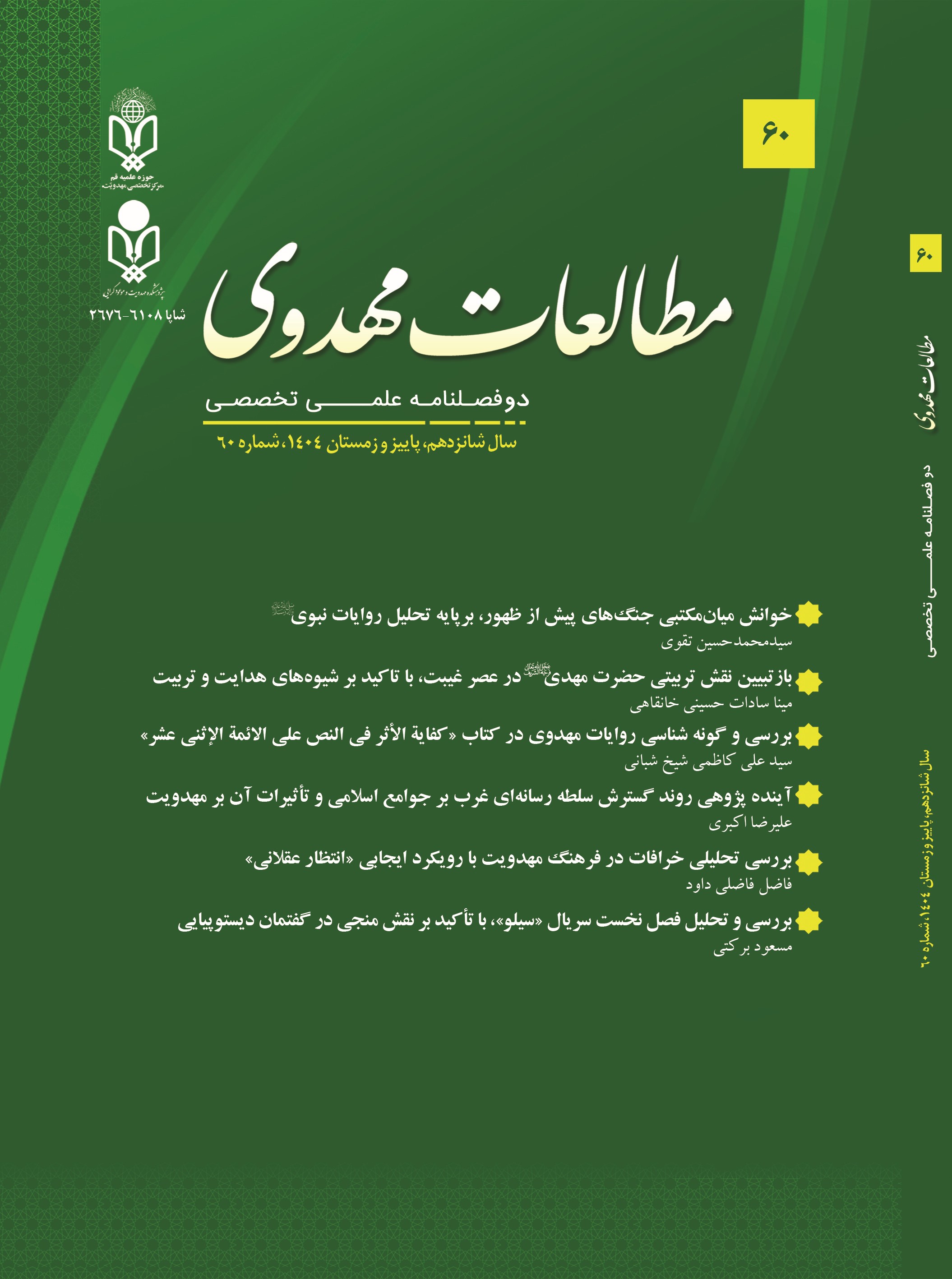
دو فصلنامه علمی تخصصی مطالعات مهدوی

دو فصلنامه علمی تخصصی مطالعات مهدوی

بازتبیین نقش تربیتی حضرت مهدی؟عج؟ در عصر غیبت، با تاکید بر شیوه‌های هدایت و تربیت

نوع مقاله : مقاله تخصصی

نویسنده
دانشجوی دکترا مرکز آموزش عالی بنت الهدی
چکیده
از منظر شیعه، امام معصوم به‌ عنوان جانشین پیامبر اکرم؟صل؟ تمامی وظایف پیامبر، به‌جز دریافت وحی را برعهده دارد. از جمله مهم‌ترین وظایف امام می‌توان به هدایت‌گری، مرجعیت علمی و تعلیم و تربیت معنوی جامعه اشاره کرد. امام معصوم در مقام انسان کامل، دارای نقش تکوینی در هدایت و رساندن مؤمنان به کمال است و نور هدایت او در قلوب مؤمنان جریان دارد. به‌عنوان سوال اساسی این نکته مطرح است که وظایف امام، بخصوص تربیت مؤمنان در عصر غیبت چگونه انجام می‌شود؟ در مقالۀ حاضر این مطلب تبیین شده است که در عصر غیبت، اگرچه امام به‌ صورت ظاهری در دسترس نیست؛ حضور باطنی دارد و وظایف غیرظاهری او همچنان مستمر است. نقش تربیتی امام زمان در عصر غیبت را می‌توان در هدایت تکوینی و باطنی، هدایت مؤمنان در بستر ابتلائات الاهی، هدایت از طریق نظام نیابت و واسطه، عنایات ویژه و تقویت فرهنگ انتظار فرج بررسی کرد. این مقاله بر اساس روش توصیفی-تحلیلی نگارش شده است.
کلیدواژه‌ها

عنوان مقاله English

Reframing the Formative Role of Imam al-Mahdi during the Occultation: Emphasis on Modes of Guidance and Education

نویسنده English

Minasadat Hosseinikhanghahi
PhD student at Bint al-Huda Higher Education Center
چکیده English

In Shi‘i thought, the infallible Imam, as the successor to the Prophet Muhammad, assumes all of the Prophet’s functions except the reception of revelation. Among the Imam’s most important responsibilities are guiding the community, serving as an authoritative source of religious knowledge, and providing spiritual education and formation. As the Perfect Human, the infallible Imam has an ontological role in guiding believers and leading them toward perfection, and the light of his guidance flows within their hearts. This raises a fundamental question: how are the Imam’s responsibilities—particularly the spiritual formation of believers—fulfilled during the Occultation? This article explains that, although the Imam is not outwardly accessible during the Occultation, he remains inwardly present and his non-manifest functions continue. The formative role of Imam al-Mahdi during the Occultation can be examined through his ontological and inward guidance, his guidance of believers through divine trials, guidance through the system of deputyship and mediation, special acts of grace, and the cultivation of a culture of awaiting the Mahdi’s advent. The article employs a descriptive-analytical method.

کلیدواژه‌ها English

Mahdism
Imam al-Mahdi
Education
Guidance
Occultation.