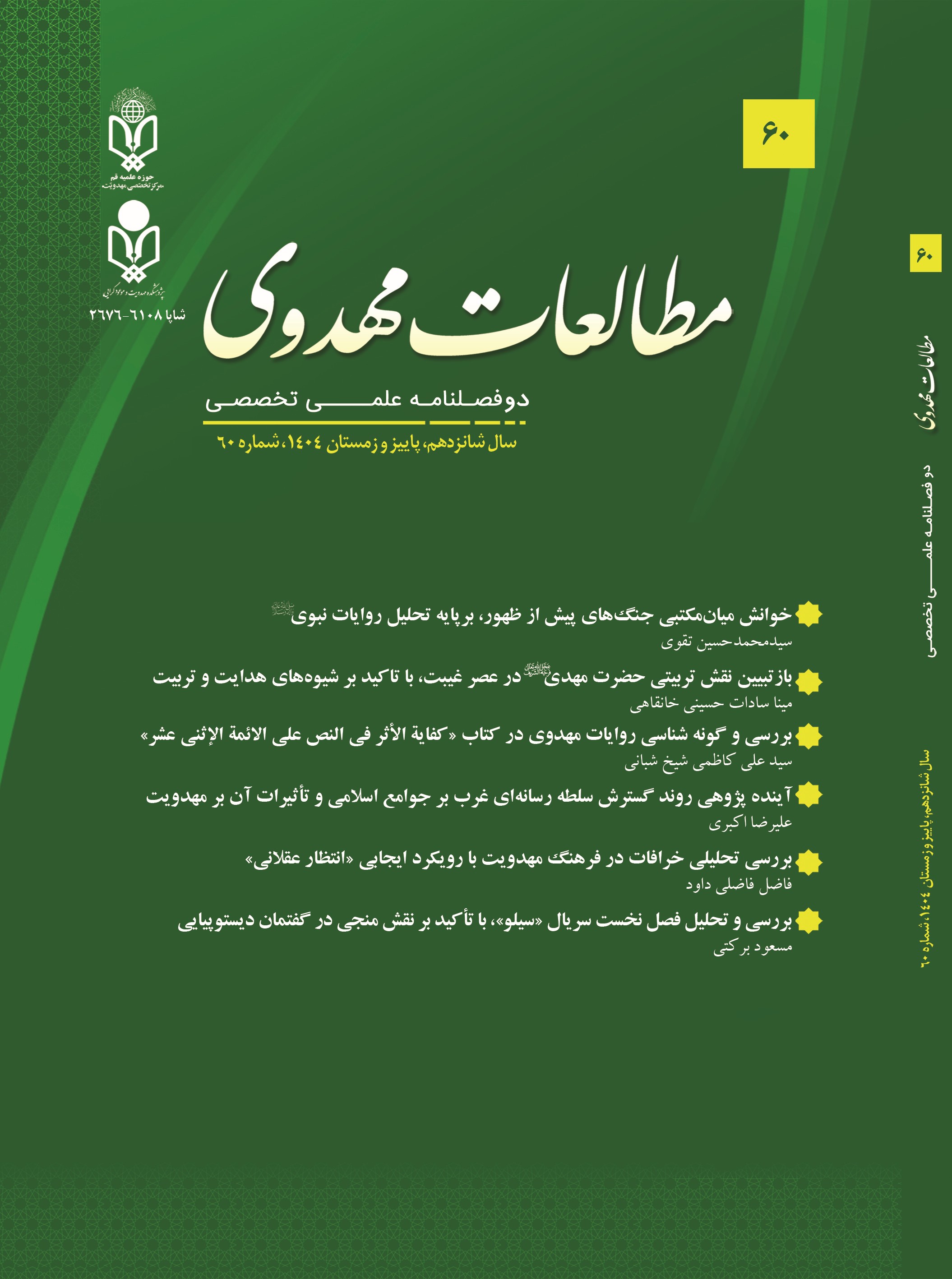
دو فصلنامه علمی تخصصی مطالعات مهدوی

دو فصلنامه علمی تخصصی مطالعات مهدوی

بررسی و تحلیل فصل نخست سریال «سیلو»، با تأکید بر نقش منجی در گفتمان دیستوپیایی

نوع مقاله : مقاله تخصصی

نویسنده
دانش پژوه سطح 3 مرکز تخصصی مهدویت حوزه علمیه قم
چکیده
سواد رسانه‌ای و وارسی نقادانه آثار دیداری‑شنیداری؛ از جمله مؤثرترین راهکارها برای مصون‌سازی ذهن مخاطب در برابر دام‌های فریب‌رسانه‌ای و بزرگ‌نمایی‌های ایدئولوژیک، به‌ویژه در محصولات هالیوود، به‌شمار می‌رود. صنعت سینمای آمریکا، در مسیر رسیدن به اهداف فراداستانی خویش، همواره درصدد تسخیر ناخودآگاه جمعی ملت‌هاست. نوشتار حاضر، با رویکرد توصیفی‑تحلیلی و در زمره تحقیقات کیفی، می‌کوشد با مطالعه‌ موشکافانه فصل نخست سریال «سیلو» و تطبیق آن با آموزه‌های دینی و نیز تحلیل‌های برجسته‌ سینمای ایران؛ ابعاد پنهان این اثر را واکاوی کند. روش پژوهش، بر توصیف نظام‌مند وضعیت موجود و بررسی پیوندهای میان عناصر بصری، دیالوگ‌ها و نشانه‌های روایی مبتنی است. این سریال ده‌قسمتی، تصویری از جهانی آخرالزمانی و پادآرمان‌شهری را بازمی‌نمایاند که مخاطب را برای ظهور منجی‌یی از بطن رکود و یأس آماده می‌سازد. تبیین این مبانی، مسیری هموار برای مواجهه آگاهانه‌تر با رسانه فراهم می‌آورد.
همچنین فصل دوم سریال سیلو ساخته و منتشر شده است و‌ به دلیل آن‌که به نظر نگارنده، فصل دوم ارزش بررسی ندارد، آن را تحلیل و بررسی نمی‌کنیم. دلیل آن هم نبودِ داستان ارزشمند و طول دادن‌های بیهوده و خسته کننده در سکانس‌های مختلف است.
کلیدواژه‌ها

عنوان مقاله English

An Analysis of Season One of Silo, with Emphasis on the Savior Figure in Dystopian Discourse

نویسنده English

Masood Barkati
Level 3 seminary student at the Specialized Mahdism Center, Qom Seminary
چکیده English

Media literacy and critical scrutiny of audiovisual works are among the most effective ways to protect audiences from media manipulation and ideological exaggeration, particularly in Hollywood productions. In pursuing its metanarrative objectives, the American film industry has consistently sought to capture the collective unconscious of nations. Adopting a descriptive-analytical approach within a qualitative research framework, this article closely examines the first season of Silo and relates it to religious teachings and influential Iranian film criticism in order to explore the work’s less apparent dimensions. The research systematically describes the series and examines the relationships among its visual elements, dialogue, and narrative signs. The ten-episode series depicts an apocalyptic, dystopian world that prepares viewers for the emergence of a savior from within stagnation and despair. Clarifying these foundations can support a more informed engagement with media.
Although the second season of Silo has also been produced and released, it is not examined here. In the author’s assessment, its narrative offers insufficient analytical value, and various scenes are unnecessarily and tediously prolonged.

کلیدواژه‌ها English

Silo
Dystopia
Savior
End times
Media literacy
دوره 16، شماره 2 - شماره پیاپی 60
پاییز و زمستان 1404
اسفند 1404
صفحه 127-148